Mold in a Bioactive Terrarium: Is It Bad and How to Fix It
Is mold in a bioactive terrarium dangerous? Why white fuzzy mold appears in new setups, when it's a problem and how to get rid of it with airflow and a cleanup crew.
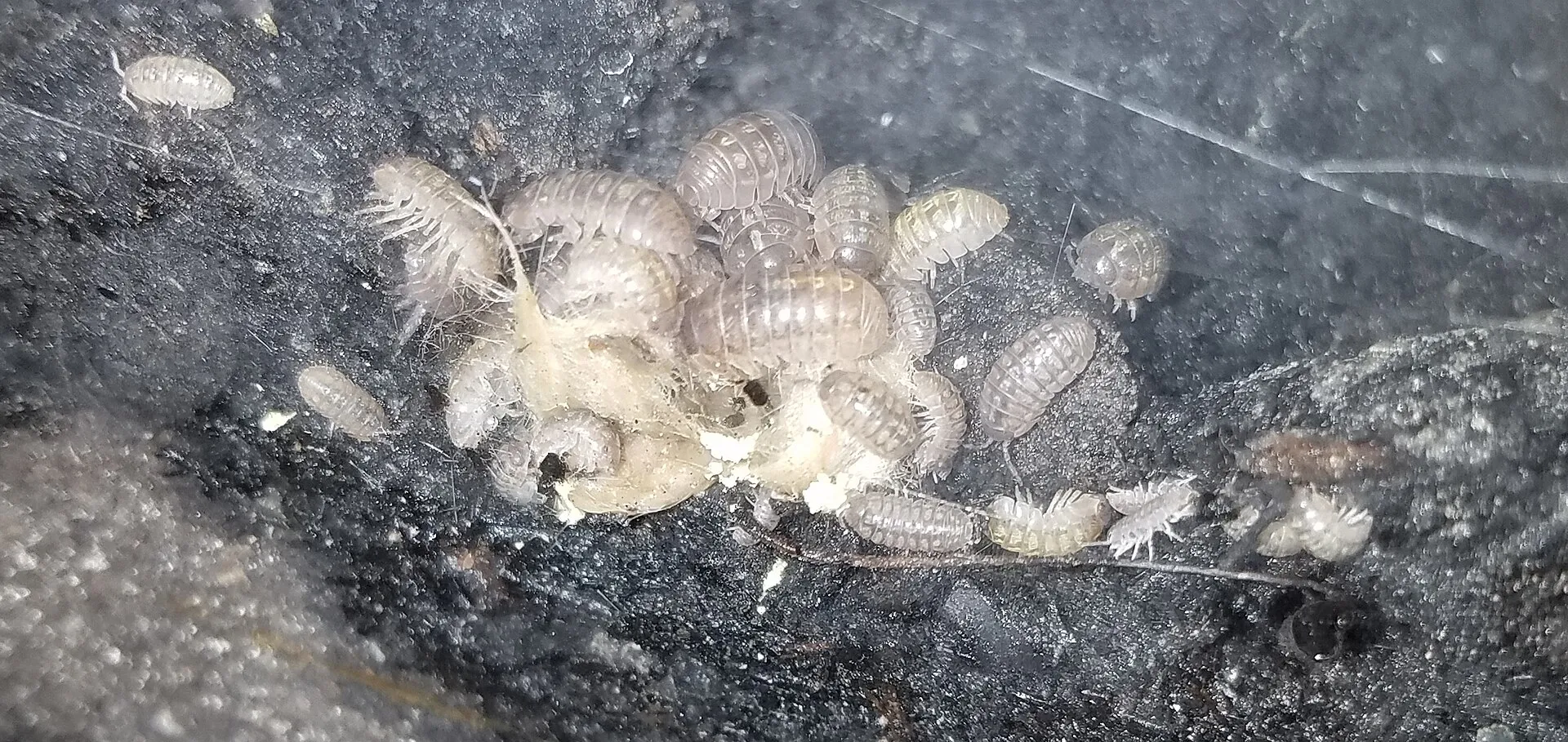 Photo: HCA, CC BY-SA 4.0
In this guide
Short answer: some mold is normal in a bioactive terrarium, especially in the first weeks. White, fuzzy mold on new wood, leaves or leftover food usually disappears on its own within 1–3 weeks as springtails and isopods eat it. It becomes a problem only if it keeps spreading, covers large areas, smells bad or keeps coming back, which usually means too much water, too little airflow or too small a cleanup crew.
Why mold appears
Mold is a fungus that breaks down dead organic matter. A bioactive enclosure is full of exactly that: fresh wood, leaf litter, soil and food. In a new setup, mold grows quickly because:
- The cleanup crew isn’t established yet
- New wood and leaves are full of nutrients
- The enclosure is humid and often poorly ventilated
- Uneaten food is sitting on the surface
Mold is part of the decomposition process. In a mature enclosure, it gets eaten about as fast as it grows.
Is it dangerous for my animal?
The common white “bloom” mold on wood and leaves in new setups is generally considered harmless, and it’s usually gone within a few weeks. Take it more seriously if:
- It keeps spreading after the first month
- It’s growing on the animal, its food bowls or its hides
- The enclosure smells musty or rotten
- Your animal shows signs of illness (see a reptile or amphibian veterinarian)
How to fix it
1. Remove the obvious sources
Take out moldy food, rotting fruit and any heavily covered pieces. Scoop off the worst patches with a spoon.
2. Improve airflow
Stagnant air is the most common reason mold keeps coming back. Options:
- Add or enlarge mesh ventilation, especially near the top
- Use a small computer-style fan for a few hours a day
- Don’t cover ventilation with glass or plastic to hold humidity
3. Check humidity and water
Many enclosures are wetter than the animal actually needs. Use a hygrometer and compare with your species’ requirements.
- Mist less often or less heavily
- Make sure the drainage layer isn’t flooded. Remove water if it reaches the substrate
- Let the surface dry a little between mistings, if your animal allows it
4. Boost the cleanup crew
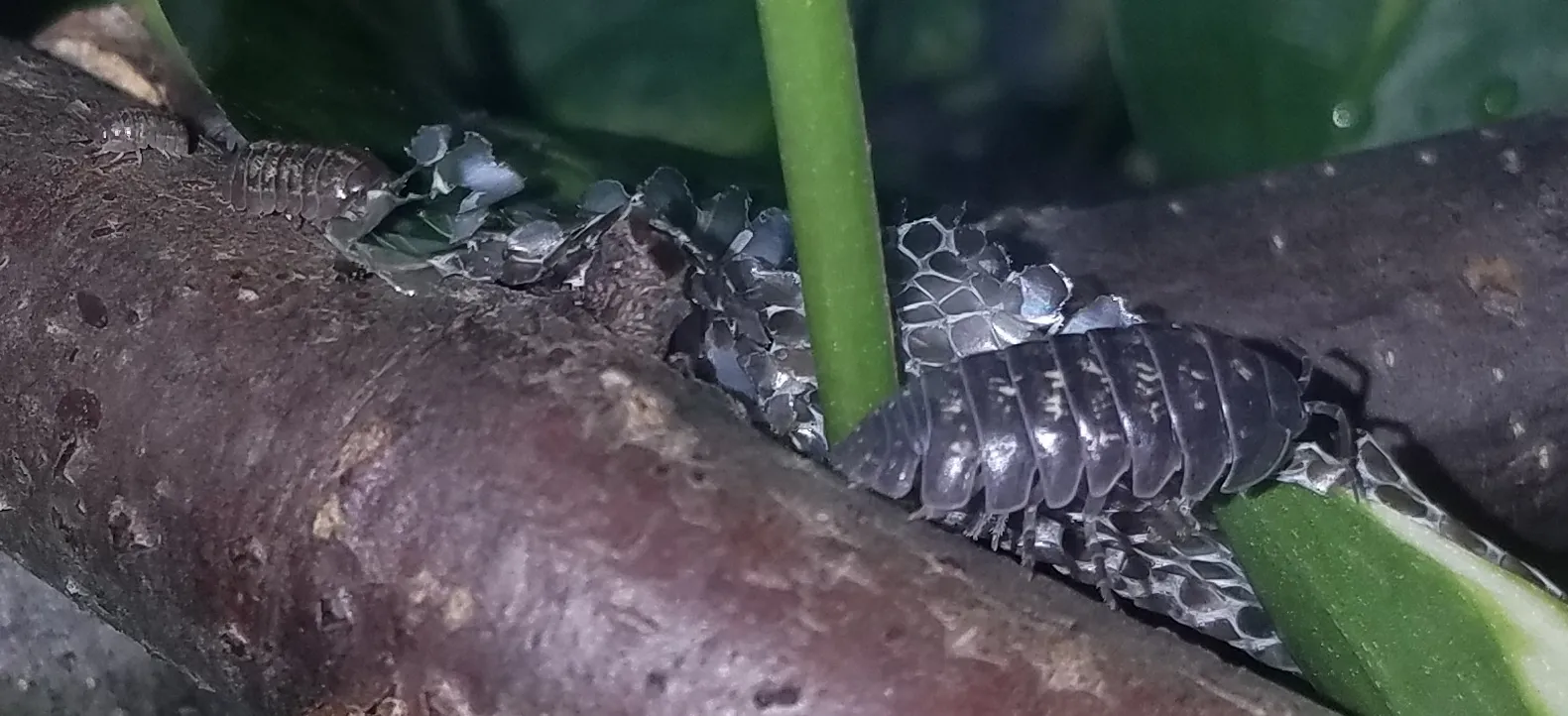
Add more springtails. They’re the best mold eaters. Isopods help too. If you don’t have a culture yet, see how to culture springtails and the best isopods for beginners.
5. Give it time
Mold in the first 2–4 weeks is expected. This is one reason to let a new bioactive enclosure run before your animal moves in. See what is a bioactive terrarium.
Mold vs. other white things
| What you see | What it probably is |
|---|---|
| White fuzzy growth on wood or leaves | Mold (common, usually temporary) |
| White threads spreading through soil | Fungal mycelium, usually harmless and part of decomposition |
| Tiny white animals jumping when touched | Springtails, your cleanup crew |
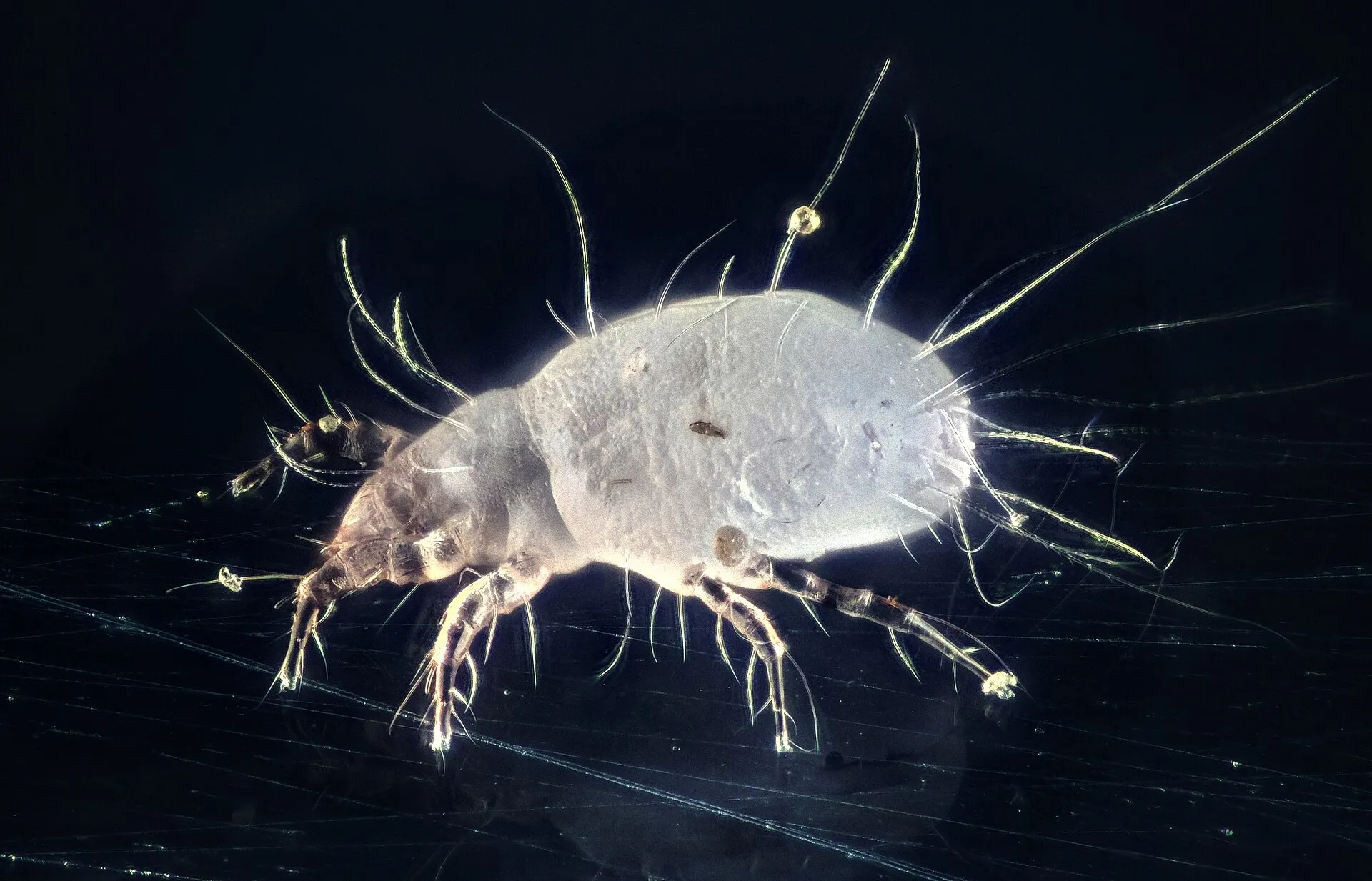
| Tiny white round animals crawling slowly | Probably mites, often a sign of too much food |
| Mushrooms | Fruiting bodies of soil fungi, usually harmless; remove them if your animal might eat them |
Frequently asked questions
How long does mold last in a new bioactive terrarium?
Usually 1–3 weeks. Once the springtails and isopods build up, it fades.
Should I remove mold from my terrarium?
Remove moldy food and heavily covered items. Small patches of mold on wood or leaves can be left for the cleanup crew.
Will mold kill my isopods?
Normal mold doesn’t. Isopods and springtails eat it. Constant heavy mold is a sign of conditions (too wet, stagnant air) that can harm them, though.
Why does my terrarium keep getting moldy?
The most common causes are poor ventilation, too much water or uneaten food. Fix those and add more springtails.