How to Culture Springtails for a Bioactive Setup
A simple method for culturing springtails at home: charcoal or soil cultures, what to feed them, how to harvest them and how to seed a bioactive terrarium.
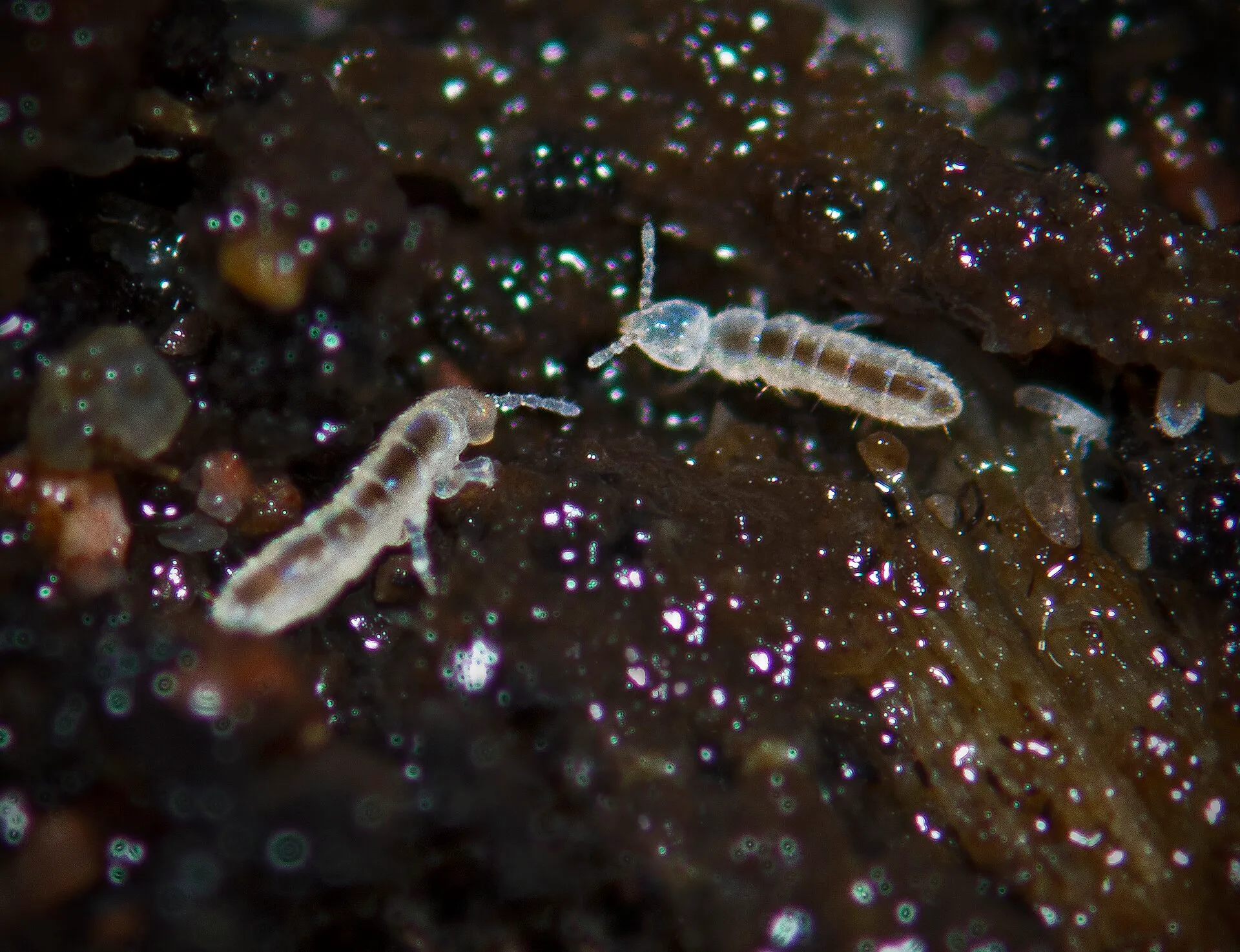 Photo: AJC1, CC BY-SA 2.0
In this guide
Short answer: the easiest way is a charcoal culture: a lidded tub with a layer of horticultural charcoal, a little standing water and a starter culture of springtails. Feed a pinch of dry yeast or fish food once or twice a week, keep it at room temperature and in a few weeks you’ll have thousands. To seed an enclosure, just tip some charcoal and springtails into it.
Why springtails?
Springtails are tiny, six-legged soil animals, usually 1–3 mm long. In a bioactive enclosure they eat mold, fungi and decaying matter, and they’re food for small frogs and lizards. They work alongside isopods: isopods break down leaves and larger waste; springtails handle mold and fine debris.
The white springtail Folsomia candida is the most common species in the hobby. Tropical “pink” and “silver” springtails are also popular.
Method 1: charcoal culture (cleanest)
You’ll need:
- A plastic tub with a lid (a shoebox size is fine)
- Horticultural charcoal chunks (not barbecue briquettes, which contain additives)
- Dechlorinated or bottled water
- A springtail starter culture
- Food: active dry yeast, fish flakes or a springtail food
Steps:
- Add charcoal 1–3 in deep.
- Add water until a little stands in the bottom, below the top of the charcoal.
- Add the springtails by tipping in the starter culture.
- Close the lid. Poke a few tiny holes for air exchange, or just open the lid when you feed.
- Feed a small pinch of yeast or food once or twice a week.
Method 2: soil culture
Use 2–3 in of moist coco fiber or organic topsoil instead of charcoal. It’s closer to natural conditions and more stable, but harder to harvest because springtails hide in the soil. Some keepers use both: soil cultures as a backup, charcoal cultures for harvesting.
What to feed
| Food | Notes |
|---|---|
| Active dry yeast | Very popular; use only a small pinch, it grows mold fast |
| Fish flakes | Easy and widely available |
| Rice or oat flakes | Cheap; a few flakes at a time |
| Commercial springtail food | Made for the job, often with added nutrients |
How much: only what disappears within a few days. If old food is covered in mold, don’t panic, since springtails eat mold, but reduce the amount next time. If food keeps building up, feed less.
Keeping the culture healthy
- Temperature: room temperature, about 65–80 °F (18–27 °C)
- Moisture: never let it dry out; add a splash of water when the charcoal looks dry
- Air: open the lid when feeding, or keep a few small holes
- Backup: start a second culture from the first once it’s thriving
Signs of trouble
- Bad smell: usually rotting food or too much water. Remove old food and pour out some water.
- Mites: tiny, round, slow-crawling animals that aren’t springtails. A few are common; a lot means too much food. See grain mites in isopod cultures.
- Numbers dropping: check moisture and food, then start a fresh culture from the best part.
Seeding a bioactive enclosure
Add a good amount of springtails before adding your animal, ideally when you set up the enclosure. They’ll spread through the substrate and leaf litter within days. Adding more every few months from your culture keeps numbers up, especially if your animals eat them. They pair well with a small soil isopod; see the best isopods for beginners.
Frequently asked questions
Do springtails need light?
No. They prefer darkness. Keep cultures out of direct sunlight.
Are springtails harmful to reptiles or plants?
No. They don’t harm reptiles, amphibians or healthy plants. They eat mold and decaying material.
How long until a springtail culture is ready to harvest?
Usually 3–6 weeks, depending on temperature and how big the starter culture was.
Will springtails get rid of mold in my terrarium?
They help a lot, especially with the white mold that appears in new setups. Read more in mold in a bioactive terrarium.