Best Isopods for Beginners: 6 Hardy Species to Start With
The best isopods for beginners and bioactive setups: six hardy, fast-breeding species, what humidity they need and which one fits your enclosure.
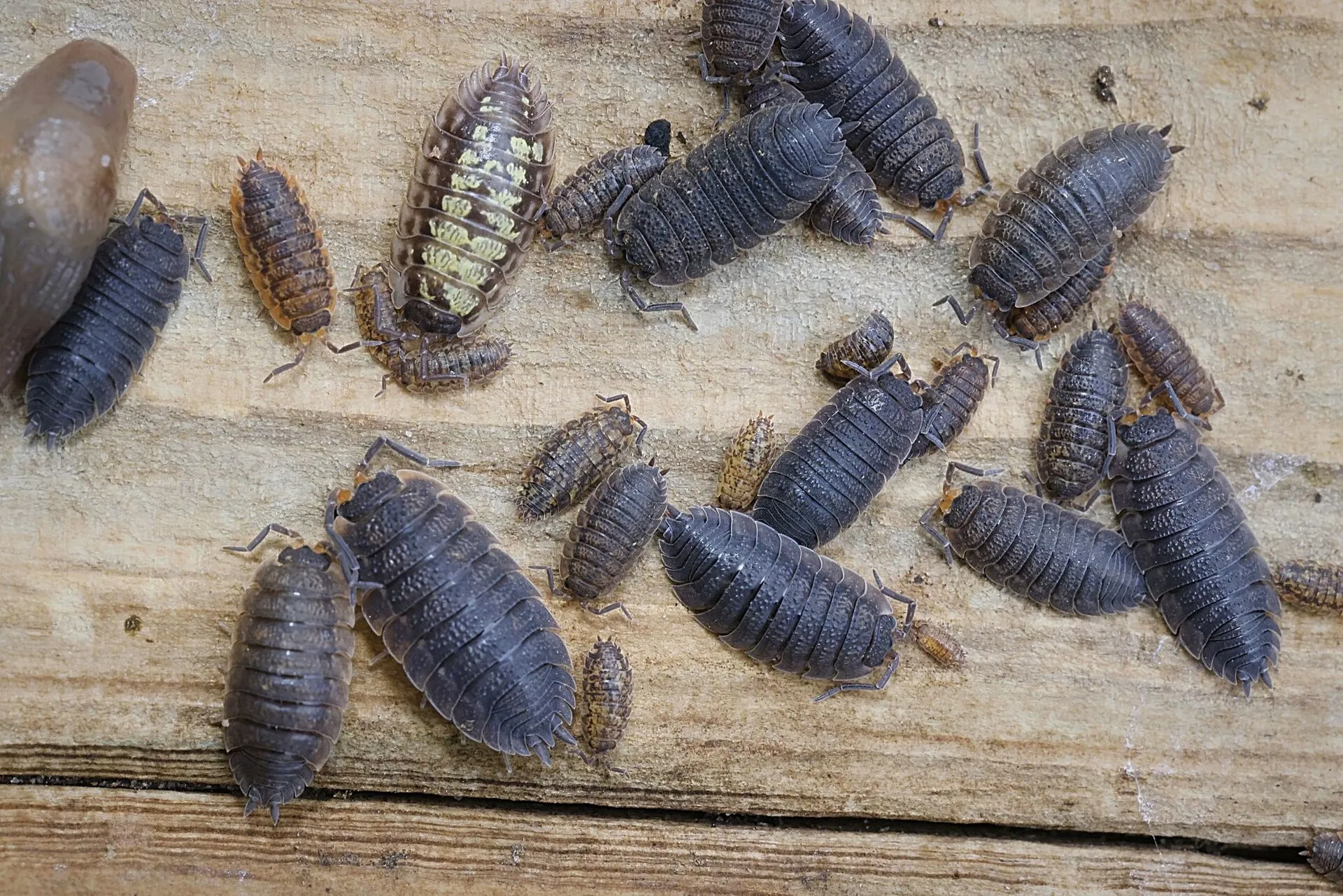 Photo: Stephen James McWilliam, CC BY 4.0
In this guide
Short answer: the easiest isopods for beginners are Porcellionides pruinosus (powder blue/orange), Trichorhina tomentosa (dwarf white), Porcellio scaber, Armadillidium vulgare, Porcellio laevis and Armadillidium maculatum (zebra). They’re hardy, forgiving of small mistakes and breed well. For a tropical bioactive enclosure, dwarf whites and powders are the most common choice.
Quick comparison
| Species | Size | Humidity | Breeding speed | Best for |
|---|---|---|---|---|
| Dwarf white (Trichorhina tomentosa) | Tiny, under 0.5 cm | High | Fast | Humid setups, dart frogs, small geckos |
| Powder blue / orange (Porcellionides pruinosus) | About 1 cm | Medium to high | Very fast | Most tropical setups |
| Common rough woodlouse (Porcellio scaber) | Up to about 1.7 cm | Medium | Fast | Medium-humidity and larger setups |
| Common pill bug (Armadillidium vulgare) | Up to about 1.8 cm | Medium, with a dry area | Moderate | Temperate and semi-arid setups |
| Dairy cow (Porcellio laevis) | Up to about 2 cm | Medium | Fast | Larger enclosures |
| Zebra (Armadillidium maculatum) | About 1.5 cm | Medium, with a dry area | Moderate | Display cultures |
Sizes are approximate adult lengths.
1. Dwarf white (Trichorhina tomentosa)
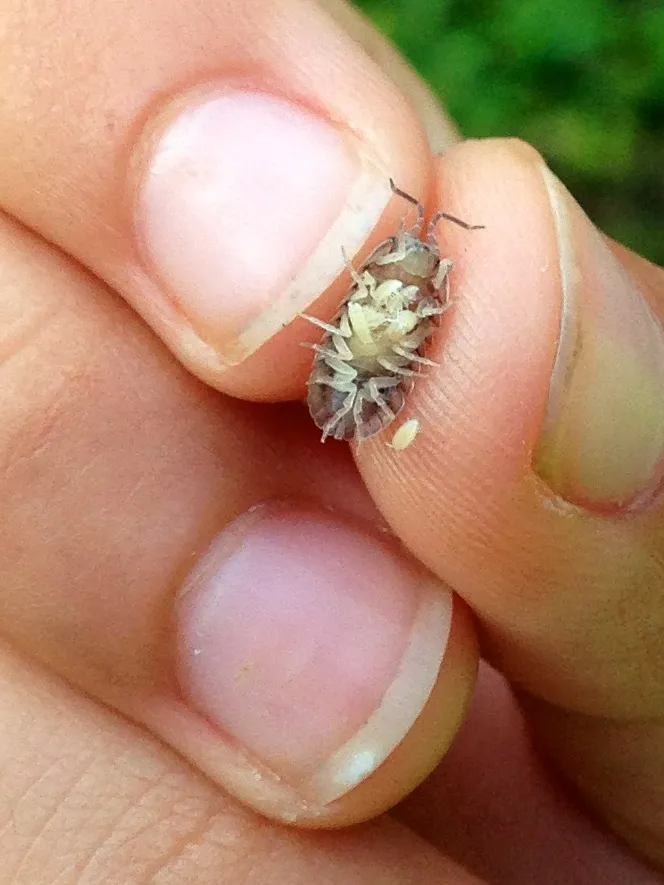
A tiny, white isopod that lives mostly in the soil. It’s the go-to choice for small, humid enclosures like dart frog vivariums because it rarely bothers animals, it’s too small to be a target, and it spreads through the whole substrate.
- Humidity: high, keep the substrate moist
- Watch out for: drying out; they don’t handle dry conditions
2. Powder blue and powder orange (Porcellionides pruinosus)
Fast, active and very hardy. They breed quickly and clean up aggressively, which makes them excellent workers in most tropical enclosures.
- Humidity: medium to high, with a moist area
- Watch out for: they’re fast breeders, so cultures can crash if food runs out
3. Porcellio scaber
One of the most common woodlice in Europe and North America, and available in many color forms (orange, calico, dalmatian and more). Tough and easy to culture.
- Humidity: medium; a moist area and a drier area
- Watch out for: they’re larger, so small plants and seedlings may get nibbled if food is short
4. Armadillidium vulgare
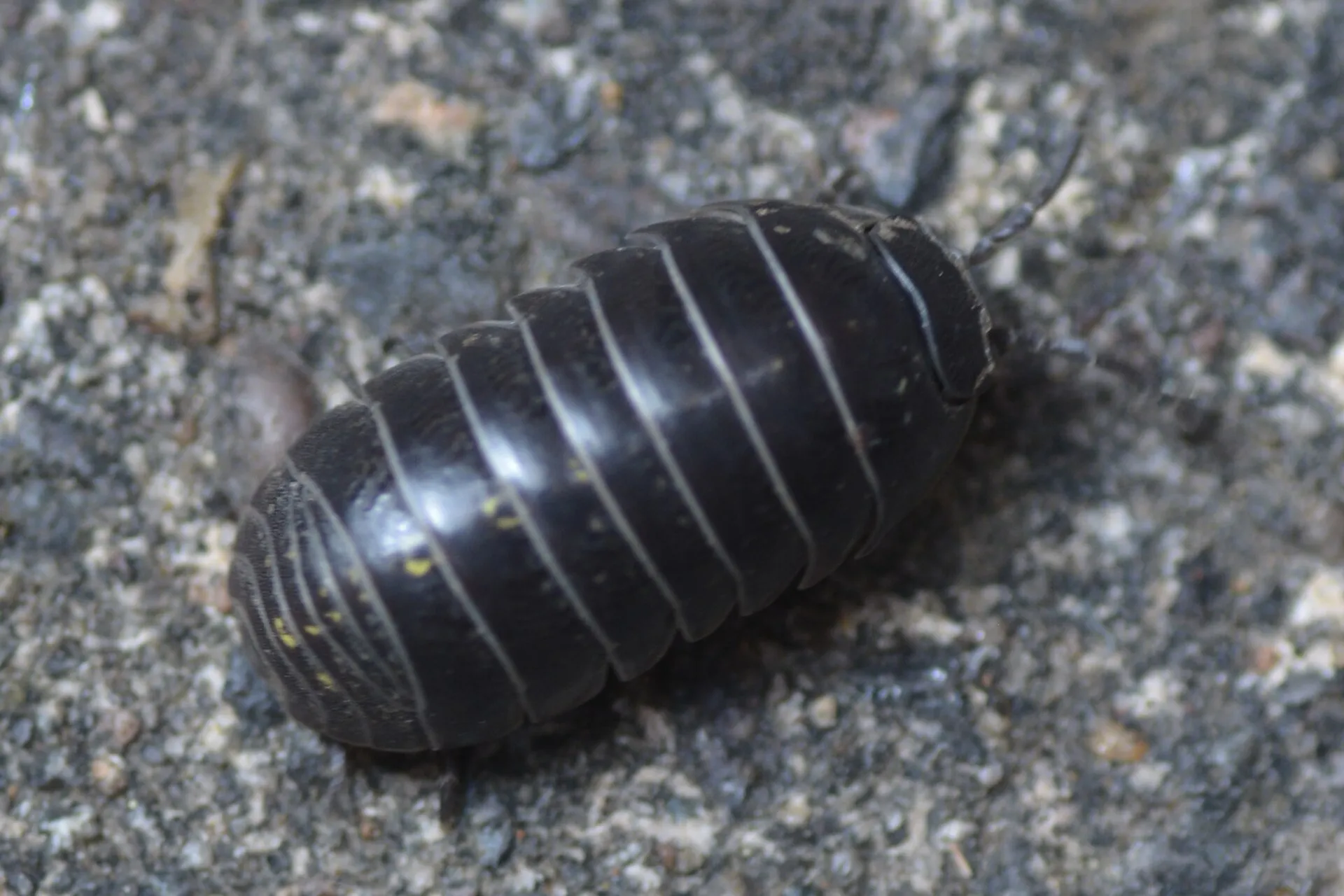
The classic “roly-poly” that rolls into a ball. Many color morphs exist. It handles drier conditions better than most species, as long as it has a moist retreat.
- Humidity: medium, with dry and moist zones
- Watch out for: slower breeding than powders
5. Dairy cow (Porcellio laevis)
A large, bold isopod with a white-and-black “dairy cow” color form. Very hardy and a strong cleaner, but its size makes it better for larger enclosures.
- Humidity: medium
- Watch out for: it’s big and hungry, so feed it well so it leaves plants alone
6. Zebra isopod (Armadillidium maculatum)
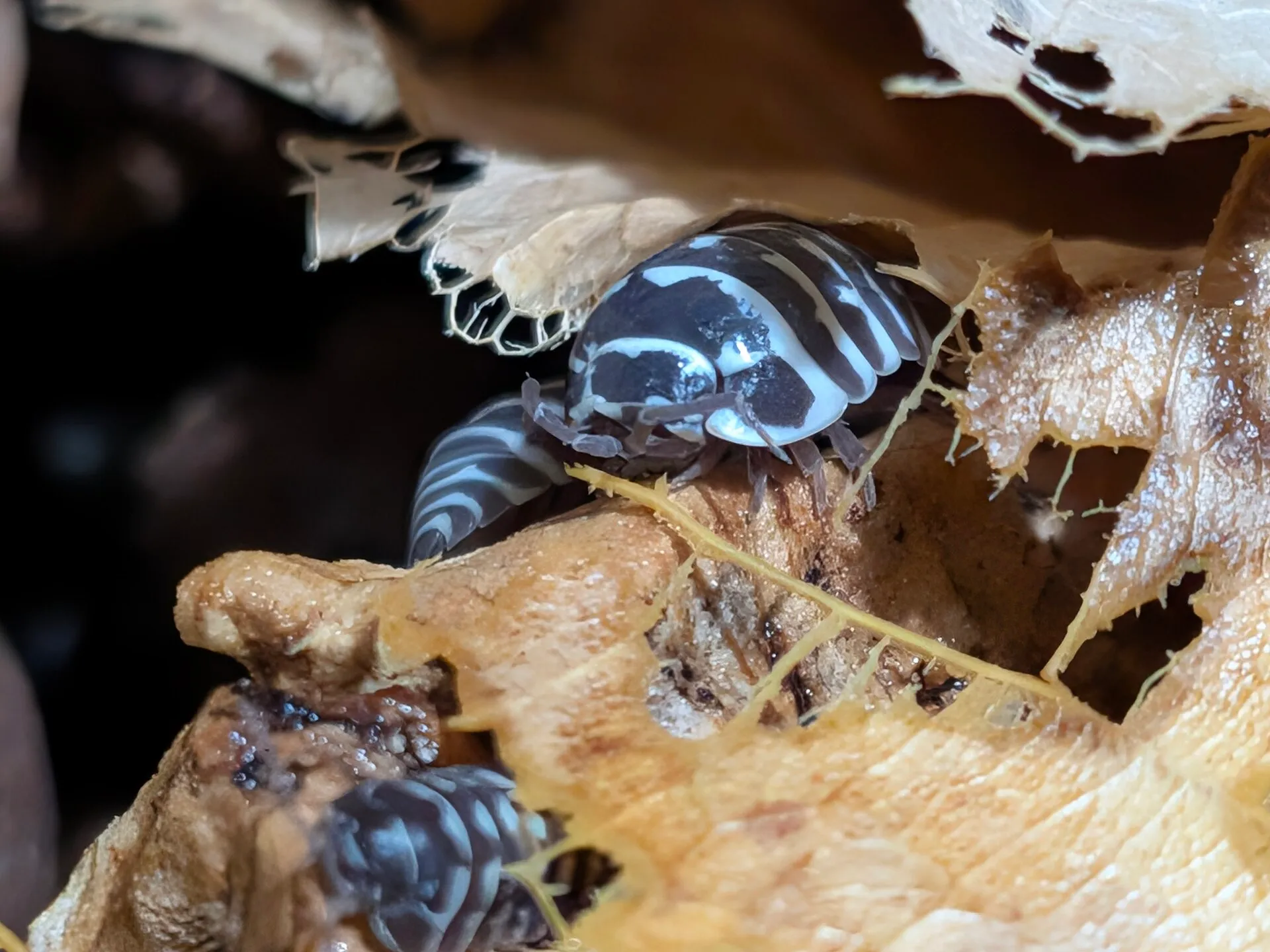
A striking black-and-white striped pill bug. It’s often kept for display as much as for cleaning. More details in the full isopod care guide.
- Humidity: medium, with a dry area
- Watch out for: slower breeding and higher price than the others
Which isopod for which setup?
| Setup | Good choices |
|---|---|
| Dart frogs, small humid vivariums | Dwarf whites + springtails |
| Crested gecko, tropical geckos | Powders, dwarf whites, P. scaber |
| Semi-arid or temperate | A. vulgare, zebras |
| Large, mixed-humidity enclosures | Powders, P. laevis, P. scaber |
Frequently asked questions
What is the easiest isopod to keep?
Powder blue or powder orange (Porcellionides pruinosus) and dwarf whites (Trichorhina tomentosa) are generally the easiest and fastest to establish.
Can I mix different isopod species?
In a bioactive enclosure, a mix is common. In culture tubs, keep species separate, because one species usually outcompetes the other over time.
How many isopods do I need for a bioactive terrarium?
For a small to medium enclosure, a starter culture of 10–20 isopods plus springtails works well. They’ll multiply once the enclosure has enough leaf litter and food.