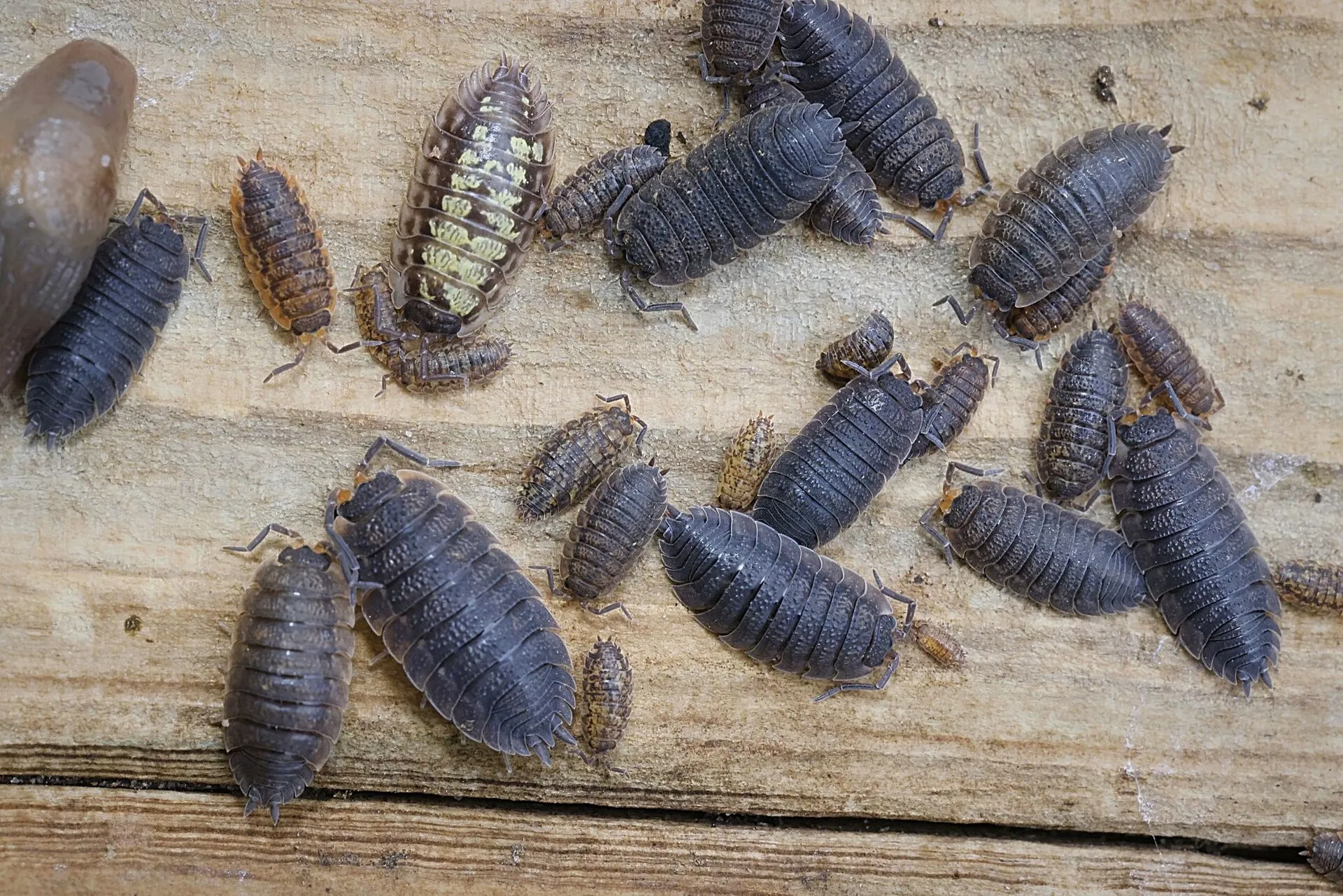
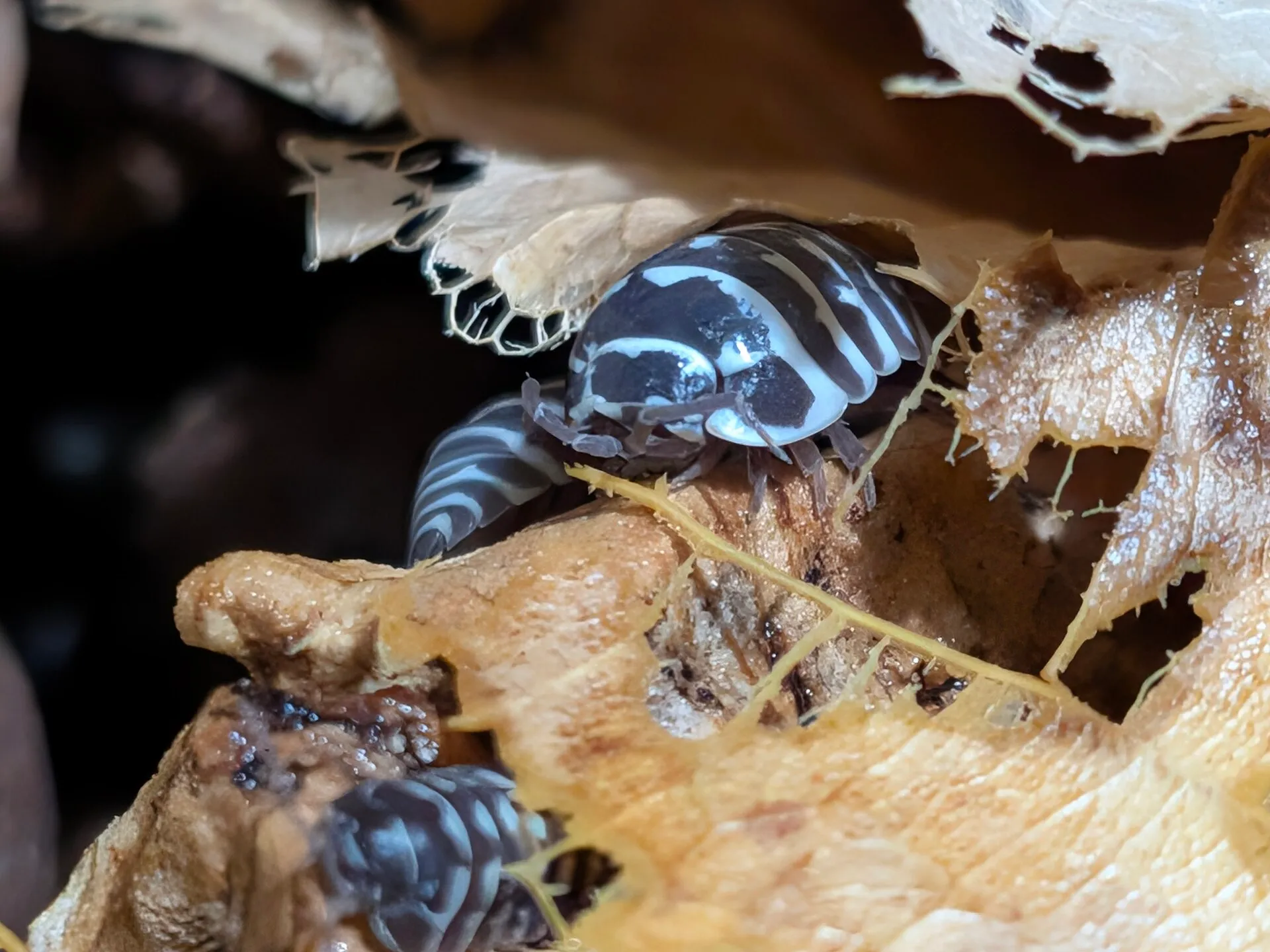
Isopod Care Guide: Humidity, Food, Calcium and Housing
How to care for isopods: the right container, substrate, humidity, temperature, food and calcium, plus a simple weekly routine for healthy cultures.
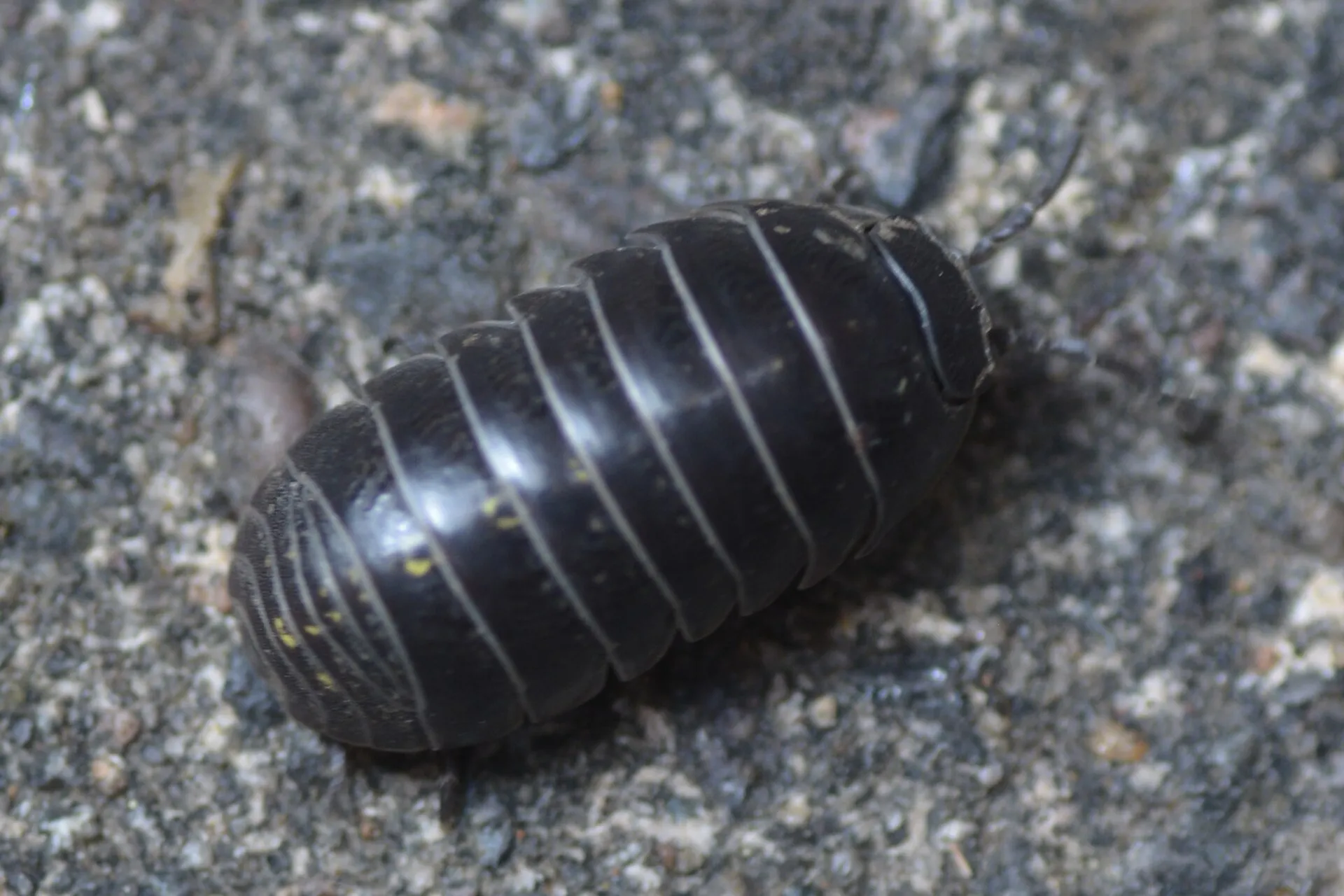 Photo: Matthew Vosper, CC BY 4.0
In this guide
Short answer: keep isopods in a ventilated tub with 3–4 in of moist, organic substrate, a humidity gradient (one side wet, one side drier), plenty of leaf litter and bark, a calcium source like cuttlebone, and room temperature of about 68–80 °F (20–27 °C). Feed small amounts of vegetables or protein once or twice a week on top of the leaves.
Housing
A simple plastic storage tub works for almost every species.
- Size: a 6–15 quart tub is plenty for a starter culture.
- Ventilation: a few small holes, or a panel of fine mesh on the lid. More ventilation for species that like it drier, less for high-humidity species.
- Escape proofing: isopods can climb, so cover holes with fine mesh.
Substrate
Isopods eat their substrate as well as live in it, so it should be organic:
- A base of coco fiber or organic topsoil without fertilizers
- Mixed with decomposed leaves, rotting hardwood and some sphagnum moss
- About 3–4 in (7–10 cm) deep, so they can burrow and moisture can spread
On top, add a thick layer of leaf litter and pieces of cork bark or rotting wood for hiding.
Humidity: create a gradient
The most important rule: don’t make the whole tub the same.
- Keep one side (about a third to half) moist, not waterlogged. Pour water into that corner every few days.
- Let the other side stay drier.
- The isopods will move to whatever suits them.
Species differ. Dwarf whites want almost everything moist; Armadillidium species like more dry space. Check the needs of your species in the best isopods for beginners.
Temperature
Most common isopods do well at normal room temperature, around 68–80 °F (20–27 °C). Many tropical species breed faster at the warmer end. Avoid placing tubs in direct sun or on a heat mat without a way for the isopods to move away from the heat.
Food
Leaf litter is their staple food. On top of that, offer small amounts of:
| Food | How often | Notes |
|---|---|---|
| Leaf litter and rotting wood | Always available | The main diet |
| Vegetables (zucchini, carrot, squash, cucumber) | 1–2× per week | Remove leftovers after 1–2 days |
| Protein (fish flakes, dried shrimp, insect-based foods) | Once a week | Small amounts; helps breeding |
| Calcium (cuttlebone, crushed eggshells, limestone) | Always available | Needed for molting |
Feed only what they finish in a day or two. Uneaten food causes mold and mites.
Calcium and molting
Like shrimp and other crustaceans, isopods molt to grow. They shed in two halves: the back half first, then the front half a day or two later. A half-grey, half-normal isopod is molting, not sick. Leave it alone and make sure calcium is available.
Weekly routine
- Every 2–4 days: moisten the wet side.
- 1–2× per week: add a small amount of food; remove leftovers.
- Every few weeks: top up leaf litter and wood.
- Every few months: add fresh substrate on top or split a large culture into a second tub.
Signs of a healthy culture
- Isopods of many sizes, including tiny babies
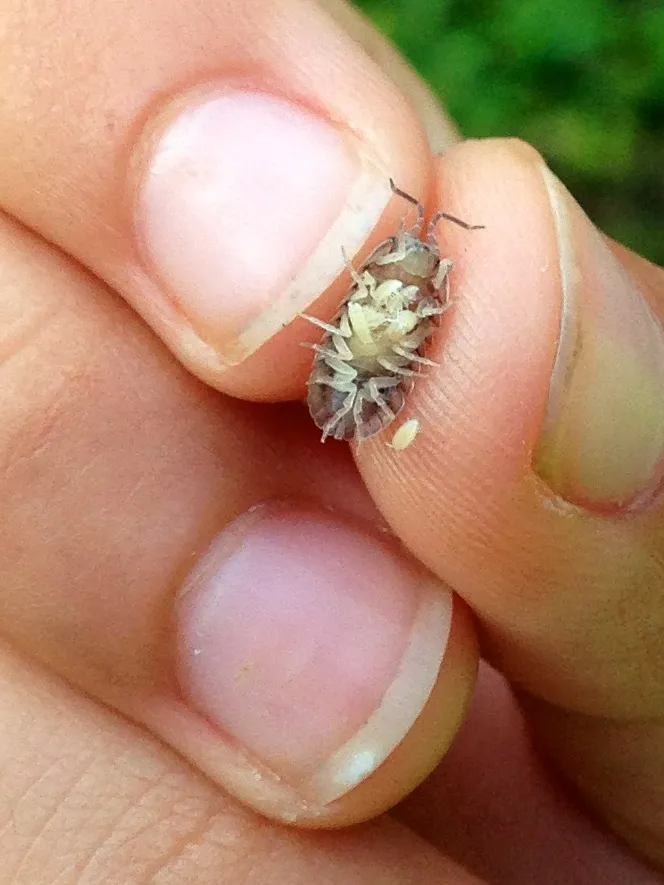
- Females carrying a pouch of eggs (a “marsupium”) under the body
- Leaves being eaten into skeletons
- No strong smell and no standing water
If numbers suddenly drop, see why are my isopods dying. For tiny white crawlers on the food, see grain mites.
Frequently asked questions
Do isopods need light?
No. They prefer darkness and hide under bark and leaves. Normal room light is fine.
How often should I mist an isopod enclosure?
Rather than misting the whole tub, pour water into the moist side every few days. Misting everything evenly removes the dry area they need.
How long do isopods live?
Many common species live around 1–3 years, depending on species and conditions.