Zebra Isopod Care (Armadillidium maculatum)
How to care for zebra isopods (Armadillidium maculatum): housing, humidity, temperature, food, calcium and breeding, with tips to keep a slow colony growing.
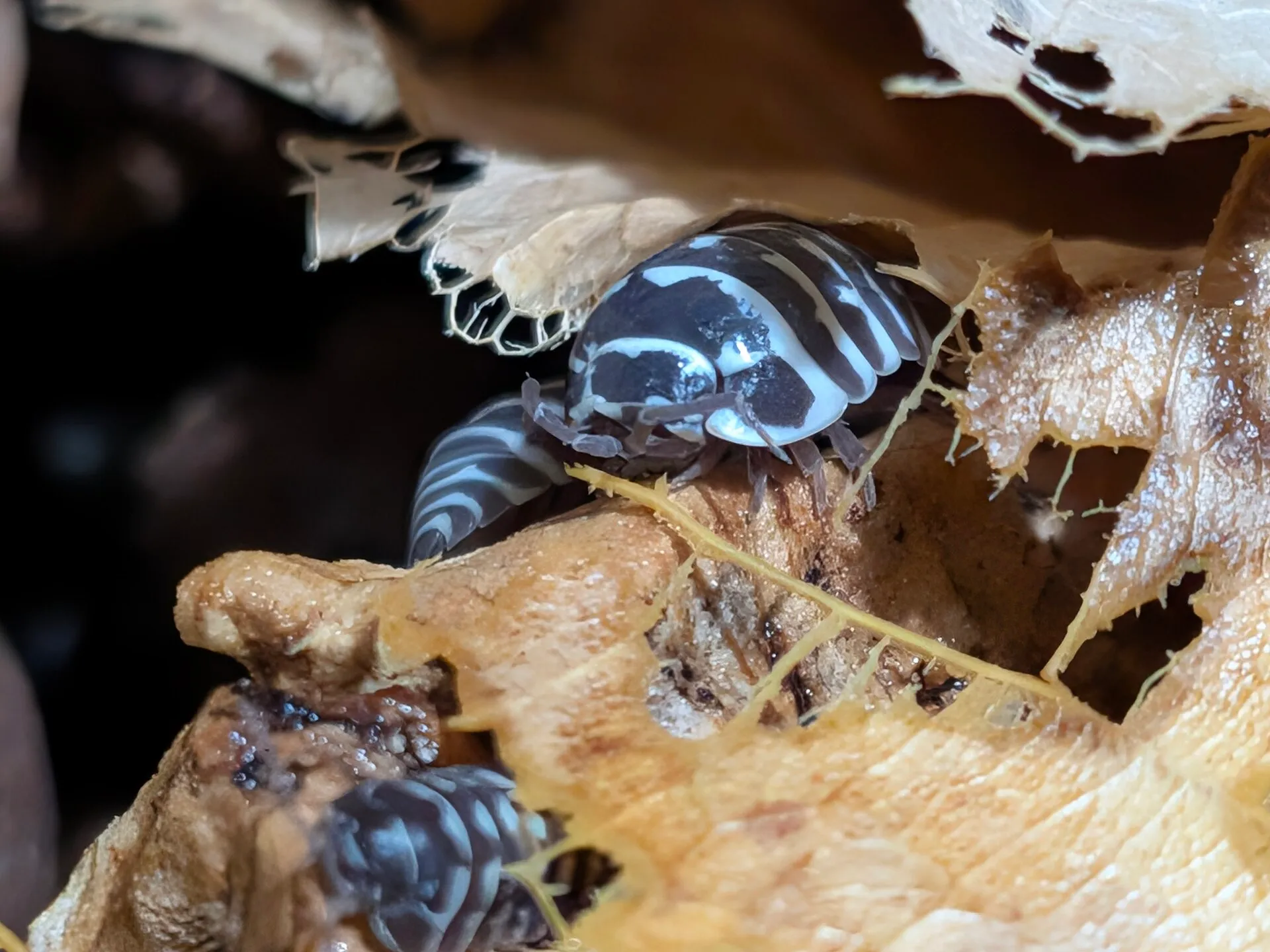 Photo: EthanPo, CC0
In this guide
Short answer: zebra isopods (Armadillidium maculatum) need good ventilation, a moist area plus plenty of drier space, room temperature around 68–78 °F (20–26 °C), lots of leaf litter, and a steady supply of calcium. They’re hardy but breed more slowly than many other species, so patience is part of keeping them.
Profile
| Scientific name | Armadillidium maculatum |
| Adult size | About 1.5 cm |
| Origin | Southern Europe (Mediterranean) |
| Humidity | Medium: a moist corner, the rest drier |
| Temperature | Room temperature, about 68–78 °F (20–26 °C) |
| Breeding speed | Slow to moderate |
| Rolls into a ball? | Yes, like other Armadillidium |
Their black-and-white stripes make them one of the most eye-catching isopods, and they’re often kept for display as much as for cleaning.
Housing
- A ventilated plastic tub or small terrarium, 6–15 quarts for a starter colony
- Good ventilation, with more holes or mesh than you’d use for tropical species. Stale, damp air is a common problem with Armadillidium
- Escape-proof lid
Substrate and moisture
Use an organic mix of topsoil, coco fiber and decomposed leaves, 2–4 in deep. Keep about a third moist and let the rest stay drier. Pour water into the moist corner every few days rather than misting the whole tub.
Food
- Leaf litter (oak, maple, beech) as the staple, always available
- Vegetables like zucchini, carrot or squash, once or twice a week
- Protein such as fish flakes or an isopod protein food, once a week
- Calcium: cuttlebone, eggshell or limestone, always available
Remove uneaten fresh food after a day or two.
Breeding
Zebras breed more slowly than species like powder blues. To help:
- Keep them at the warmer end of their range
- Offer protein and calcium regularly
- Provide cork bark on moist soil for hiding
- Avoid disturbing them too often
Read our general tips on how to breed isopods faster.
Are zebras good for bioactive enclosures?
They can work in enclosures with medium humidity and good airflow. In very humid tropical vivariums they may struggle. For those, dwarf whites or powders are usually a better choice. See the best isopods for beginners.
Frequently asked questions
Are zebra isopods good for beginners?
Yes, as long as you’re patient. They’re hardy, but colonies grow slowly.
How big do zebra isopods get?
About 1.5 cm as adults.
Why is my zebra isopod colony not growing?
The most common causes are cold temperatures, too little protein or calcium, and poor ventilation. Also check that you have both males and females.
Can zebra isopods live with other isopods?
In a large bioactive enclosure, yes. In culture tubs, keep species separate.