How to Breed Isopods Faster: 8 Tips That Actually Work
Isopod colony not growing? Eight practical ways to breed isopods faster: temperature, moisture, protein, calcium, leaf litter, space and less disturbance.
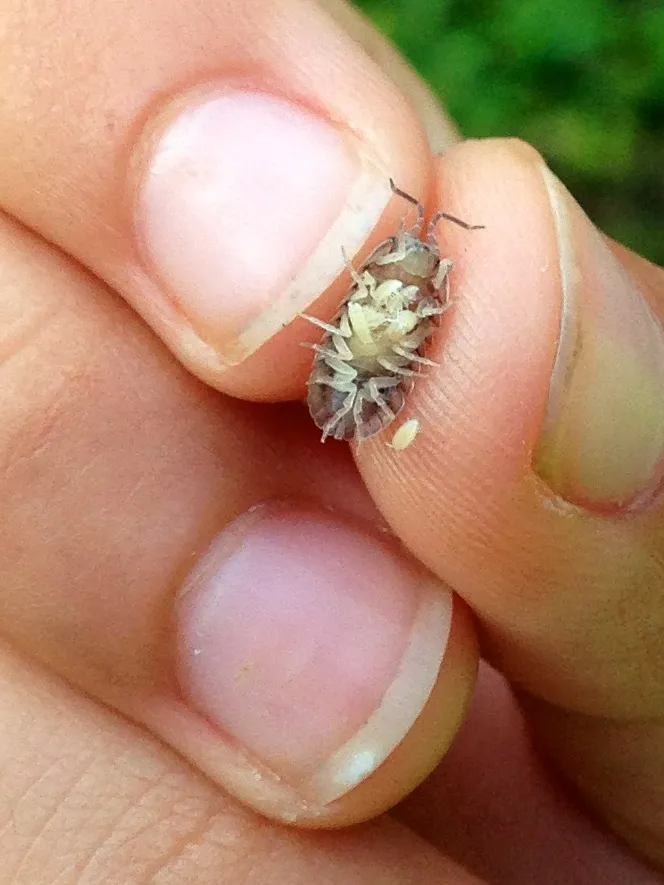 Photo: Patrick Niemeyer, CC BY-SA 3.0
In this guide
- How isopods breed
- 1. Keep them warm
- 2. Get the moisture right
- 3. Feed protein
- 4. Provide calcium
- 5. Keep plenty of leaf litter and rotting wood
- 6. Give them hiding places
- 7. Don’t disturb them too much
- 8. Give the colony space
- How long until I see babies?
- Troubleshooting a culture that won’t grow
- Frequently asked questions
Short answer: isopods breed fastest when they’re warm (around 75–80 °F / 24–27 °C), have a moist area, plenty of leaf litter and rotting wood, regular protein and calcium, and are left alone. Most slow cultures are too dry, too cold, underfed on protein or disturbed too often.
How isopods breed
Female isopods carry their eggs in a fluid-filled pouch under the body called a marsupium (brood pouch). The babies (called mancae) hatch inside it and are released as tiny, pale copies of the adults. Depending on species and conditions, a female may produce several broods a year.
1. Keep them warm
Most common species breed faster at the warmer end of room temperature, around 75–80 °F (24–27 °C). Below about 68 °F (20 °C), breeding slows down noticeably. A heat mat on one side of the tub, never under the whole thing, can help in cold rooms.
2. Get the moisture right
Keep part of the enclosure consistently moist. Many breeding problems are simply a culture that’s too dry. Pour water into one corner every few days so there’s always a damp zone. See our isopod care guide.
3. Feed protein
Protein helps females develop broods. Once or twice a week, offer a small amount of fish flakes, dried shrimp, insect-based foods or a commercial isopod protein. Remove leftovers after a day or two to avoid mites and mold.
4. Provide calcium
Isopods molt regularly and need calcium to rebuild their exoskeleton, especially young, fast-growing ones. Keep a piece of cuttlebone, crushed eggshell or limestone in every culture.
5. Keep plenty of leaf litter and rotting wood
Leaf litter is their main food. Rotting hardwood is also food and a hiding place. Keep a thick layer and top it up before it runs out.
6. Give them hiding places
Cork bark flats on moist soil create dark, humid microhabitats where females feel safe. Lift the bark and you’ll often find the colony gathered underneath.
7. Don’t disturb them too much
Checking the culture every day, digging through the substrate or moving it around stresses isopods. Pregnant females may drop their broods when disturbed. Limit checks to feeding and watering.
8. Give the colony space
A crowded culture competes for food and space, and breeding slows. When the tub is packed, split the culture into a second container.
How long until I see babies?
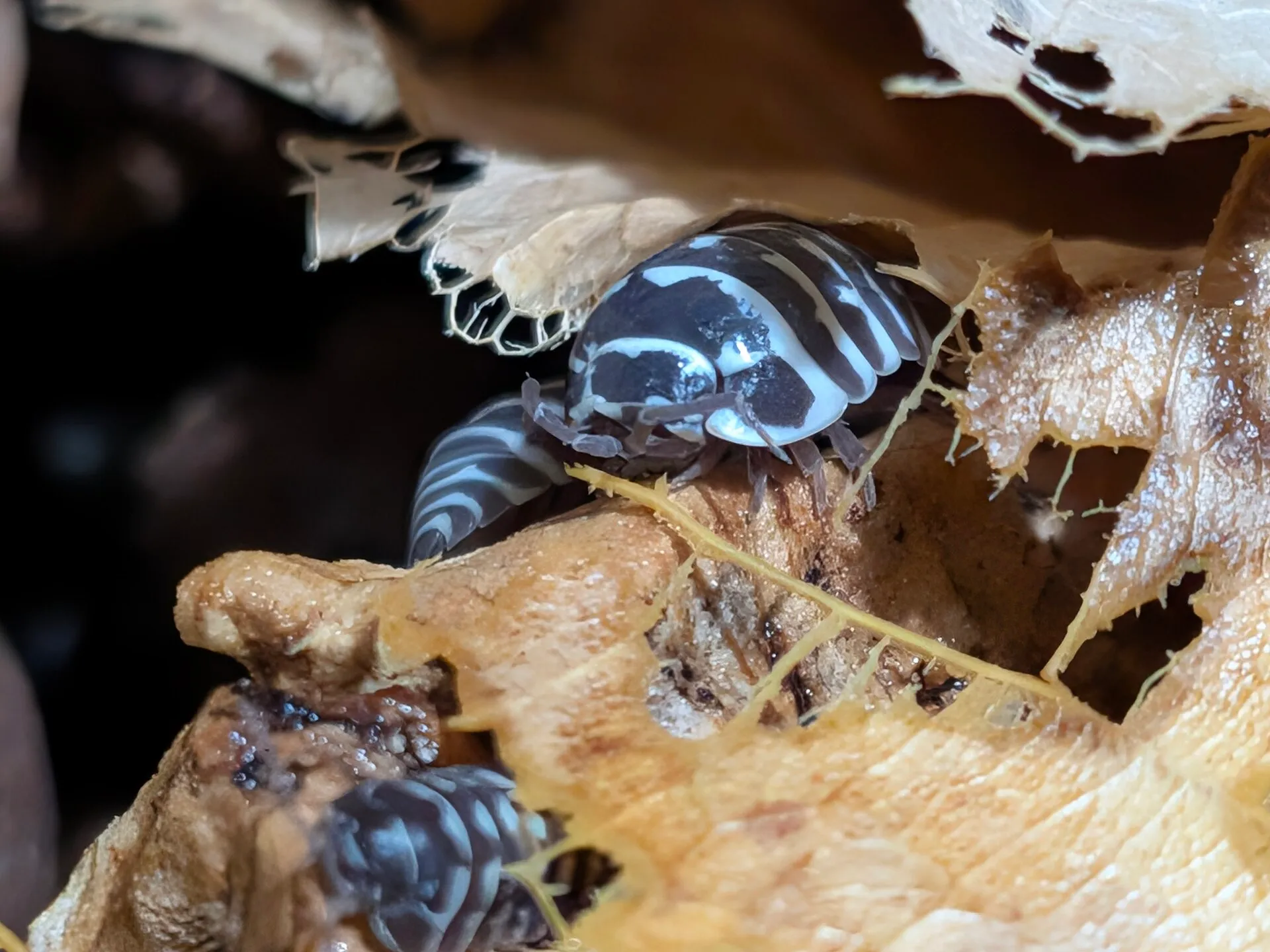
A new culture often needs a few weeks to a couple of months to settle before you notice babies. After that, a healthy culture of a fast species like powder blues can grow quickly. Slower species like zebras or larger Armadillidium take more time. See the best isopods for beginners for species that breed fast.
Troubleshooting a culture that won’t grow
| Symptom | Likely cause |
|---|---|
| No babies after 2–3 months | Too cold, too dry, or only one sex |
| Babies appear, then vanish | Culture drying out, or predators like centipedes |
| Adults dying | See why are my isopods dying |
| Lots of tiny white crawlers | Probably grain mites, usually from too much food |
Frequently asked questions
How fast do isopods breed?
It varies by species. Fast species like Porcellionides pruinosus can grow a colony quickly; slower species like Armadillidium maculatum take much longer.
Do isopods need a male and a female to breed?
Most species do. Some, like dwarf whites (Trichorhina tomentosa), are known to reproduce without males (parthenogenesis).
Should I separate pregnant isopods?
No. Moving them can cause stress. Leave them in the culture.