Grain Mites in Isopod Cultures: Harmful or Not?
Tiny white bugs in your isopod or springtail culture? How to identify grain mites, whether they're harmful, why they appear and how to get numbers under control.
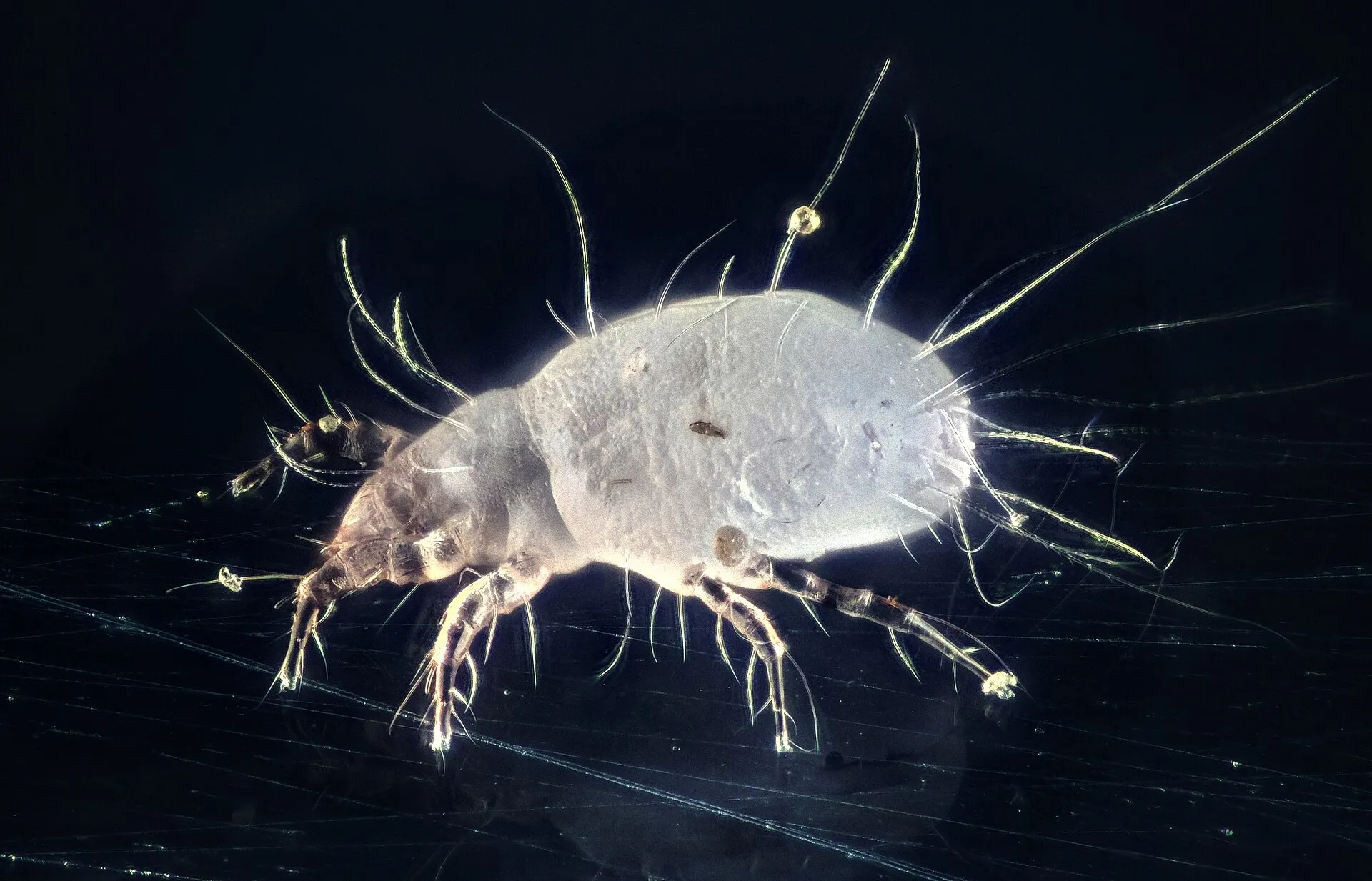 Photo: Gilles San Martin, CC BY-SA 2.0
In this guide
Short answer: grain mites are tiny, white, slow-crawling mites that feed on leftover food and mold. A few are normal in isopod and springtail cultures and generally harmless. Large numbers mean too much food, too much moisture or poor airflow. They stress isopods by crawling on them and competing for food. Feed less, remove leftovers and let the culture dry slightly, and numbers drop.
How to identify them
| Grain mites | Springtails | Baby isopods | |
|---|---|---|---|
| Size | Under 0.5 mm, dust-like | 1–3 mm | 1–2 mm |
| Shape | Round, 8 legs | Elongated, 6 legs, antennae | Flat, oval, like tiny adults |
| Movement | Slow, steady crawling | Jump when disturbed | Walk, often hide |
| Where | On food, in crowds | Everywhere, near water | Under bark and leaves |
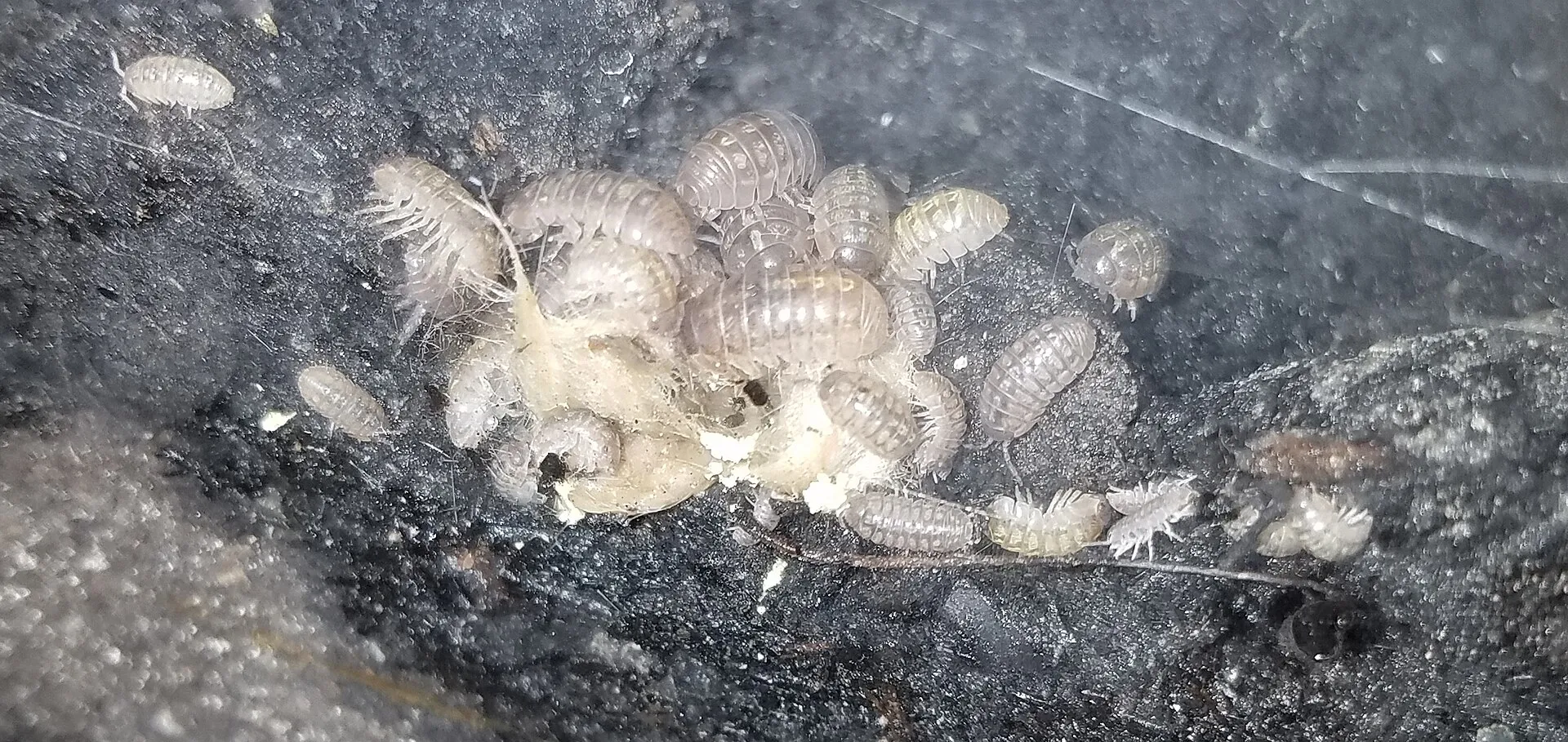
A magnifier makes the difference obvious. Mites often form a white, “moving dust” layer on leftover food.
Are grain mites harmful?
In small numbers, no. They’re scavengers eating the same leftovers as your isopods.
In large numbers they:
- Compete for food with isopods and springtails
- Crawl on isopods, which stresses them and may interfere with molting
- Can be a sign that the culture has too much rotting food and is heading toward other problems
Why they appear
- Overfeeding, especially dry foods like fish flakes, grains, oats or yeast
- Leftover food sitting for days
- Too much moisture with poor ventilation
- They’re often already present in leaf litter, substrate or starter cultures and multiply when food is abundant
How to reduce them
- Feed less. Only what disappears in a day or two.
- Use a dish. Feed in a small dish and remove leftovers.
- Pull out mite-covered food. Lift out swarmed food and throw it away.
- Let the culture dry a little and increase ventilation.
- Add springtails. They compete with mites for the same food.
- Trap them. Put a slice of vegetable in the tub for a few hours, then remove it with the mites on it. Repeat.
For springtail cultures, feeding less and using small amounts of food helps too. See how to culture springtails.
What not to do
- Don’t use pesticides or anti-mite sprays. They’ll kill your isopods and springtails too.
- Don’t bake or freeze the whole culture.
- Don’t panic over a handful of mites. Some are normal.
Frequently asked questions
Do grain mites kill isopods?
Usually not directly, but large numbers stress isopods and compete for food. Keep numbers down by feeding less.
Will grain mites go away on their own?
Numbers drop when leftover food disappears. They rarely vanish completely, and that’s fine.
Are grain mites harmful to reptiles?
Grain mites are scavengers, not the parasitic mites that feed on reptiles. Still, keep numbers low in the enclosure and see a vet if you see mites on the animal.
Why are there so many mites in my springtail culture?
Almost always too much food, especially yeast. Feed smaller amounts less often.