What Is a Bioactive Terrarium? A Beginner's Guide
What a bioactive terrarium is, how it works, what you need to build one, and the honest pros and cons compared with a standard reptile setup.
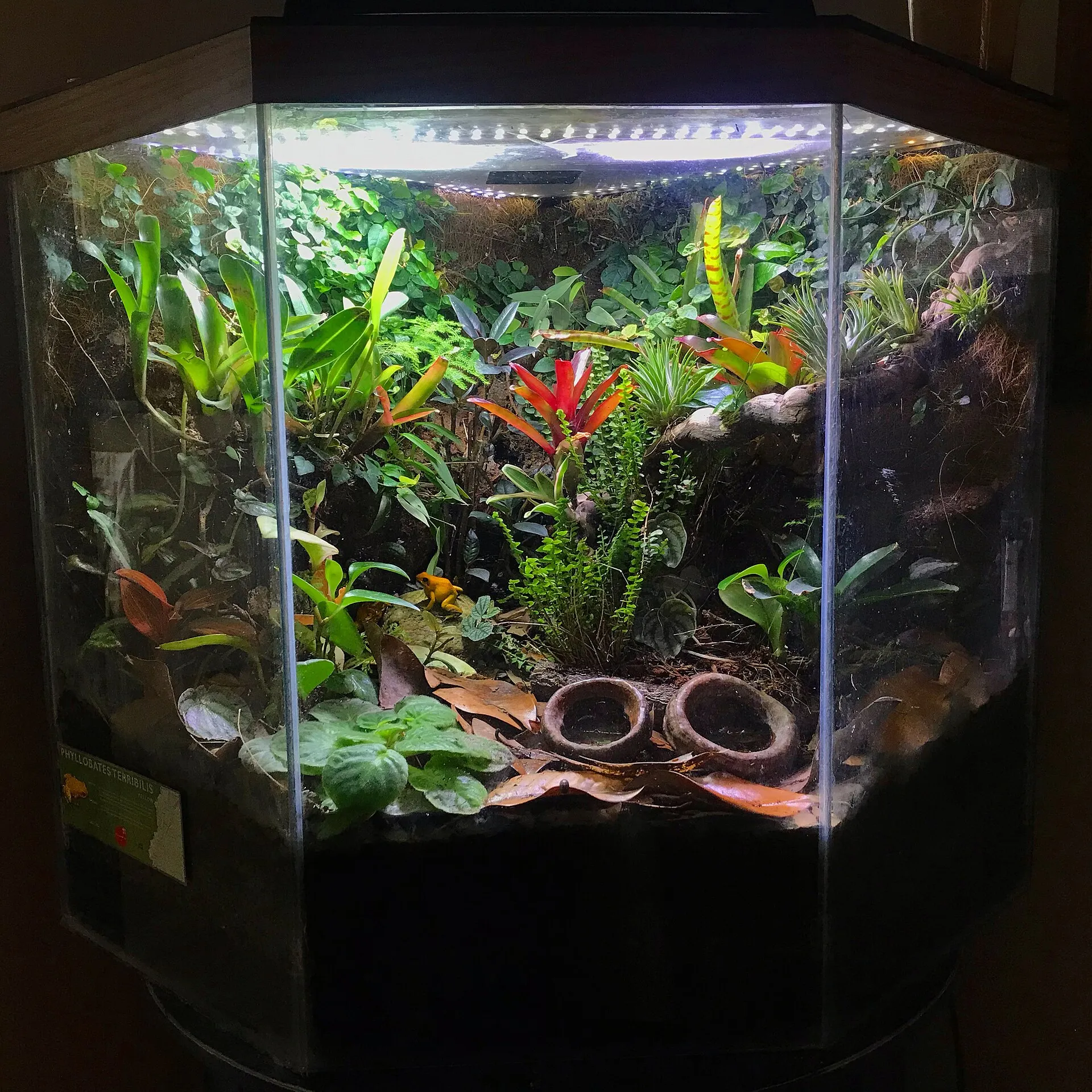 Photo: Connor Long, CC BY-SA 4.0
In this guide
Short answer: a bioactive terrarium is an enclosure that works like a small ecosystem. Live plants, a living soil and a cleanup crew of small animals, usually isopods and springtails, break down waste, shed skin, leftover food and mold. Done well, you almost never replace the substrate. You still clean the glass, remove large waste and check on your animal.
How it works
A standard reptile enclosure uses paper towels or loose substrate that you clean or replace regularly. A bioactive enclosure replaces that job with living things:
- Your animal produces waste, sheds skin and leaves uneaten food.
- The cleanup crew (isopods, springtails and others) eats that material, along with mold and dead plant matter.
- Bacteria and fungi in the soil break it down further into nutrients.
- Plants take up those nutrients and grow.
The animals that do the cleaning are called detritivores: animals that feed on dead organic material.
The layers of a typical bioactive setup
| Layer | What it’s for | Typical depth |
|---|---|---|
| Drainage layer | Collects excess water in humid setups | 1–2 in (2.5–5 cm) |
| Mesh barrier | Keeps soil from falling into the drainage | – |
| Bioactive substrate | Living soil for roots and the cleanup crew | 3–4 in (7–10 cm) |
| Leaf litter | Food and cover for isopods and springtails | 1–2 in |
| Plants, wood and decor | Cover, climbing and humidity | – |
Not sure how much of each to buy? Use our Substrate Calculator.
What you need
- An enclosure sized for your animal (front-opening glass or PVC is easiest to work with)
- Drainage material and a mesh barrier (for humid setups)
- A bioactive substrate mix
- Leaf litter (oak, magnolia, sea grape or similar, free of pesticides)
- Live plants suited to the humidity and light
- A plant-growing light, plus whatever heat and UVB your animal needs
- A cleanup crew: usually isopods and springtails. See the best isopods for beginners
Pros and cons
| Pros | Cons |
|---|---|
| Much less substrate cleaning and replacing | Higher start-up cost |
| More natural behavior: digging, foraging, hiding | Takes time to build and settle |
| Live plants help hold humidity | Harder to spot and remove waste or check on the animal |
| Looks like a small piece of nature | Not ideal for animals that need strict quarantine or medical care |
Common beginner mistakes
- Adding the animal too soon. Let the enclosure run for 2–4 weeks so the plants root and the cleanup crew establishes.
- Too few isopods and springtails. Start with a healthy culture, not a handful.
- No leaf litter. Isopods need it as food and shelter. Without it, they may die out or start eating plants.
- Ignoring ventilation. Some mold is normal in a new setup, but stale, wet air makes it worse. Read our guide to mold in bioactive terrariums.
- Using pesticide-treated plants or garden soil that may contain fertilizers, pesticides or unwanted pests.
Is bioactive right for you?
Bioactive works well for many geckos, frogs, small snakes and other reptiles and amphibians kept in stable, planted enclosures. It’s less practical if your animal needs frequent vet checks, is sick, is in quarantine, or is a large animal that tears up plants. When in doubt, ask a reptile veterinarian and check the needs of your specific species first.
Frequently asked questions
Do you ever change the substrate in a bioactive terrarium?
Rarely. In a working setup, you top it up over time and may replace part of it after a few years or if something goes wrong. You’ll still spot-clean large waste.
How long does a bioactive terrarium take to set up?
Building it takes an afternoon. Letting plants root and the cleanup crew settle takes about 2–4 weeks before you add your animal.
Do bioactive terrariums smell?
A healthy one shouldn’t. A bad smell usually means too much water, poor drainage or too little cleanup crew.
Can I convert my existing enclosure to bioactive?
Usually yes. Move your animal to a temporary tub, build the layers, plant it, add the cleanup crew and let it settle before moving the animal back.