Bioactive Substrate Mix: DIY Recipe and Ratios
How to mix your own bioactive substrate: a simple tropical recipe, an arid variation, what each ingredient does and what to avoid.
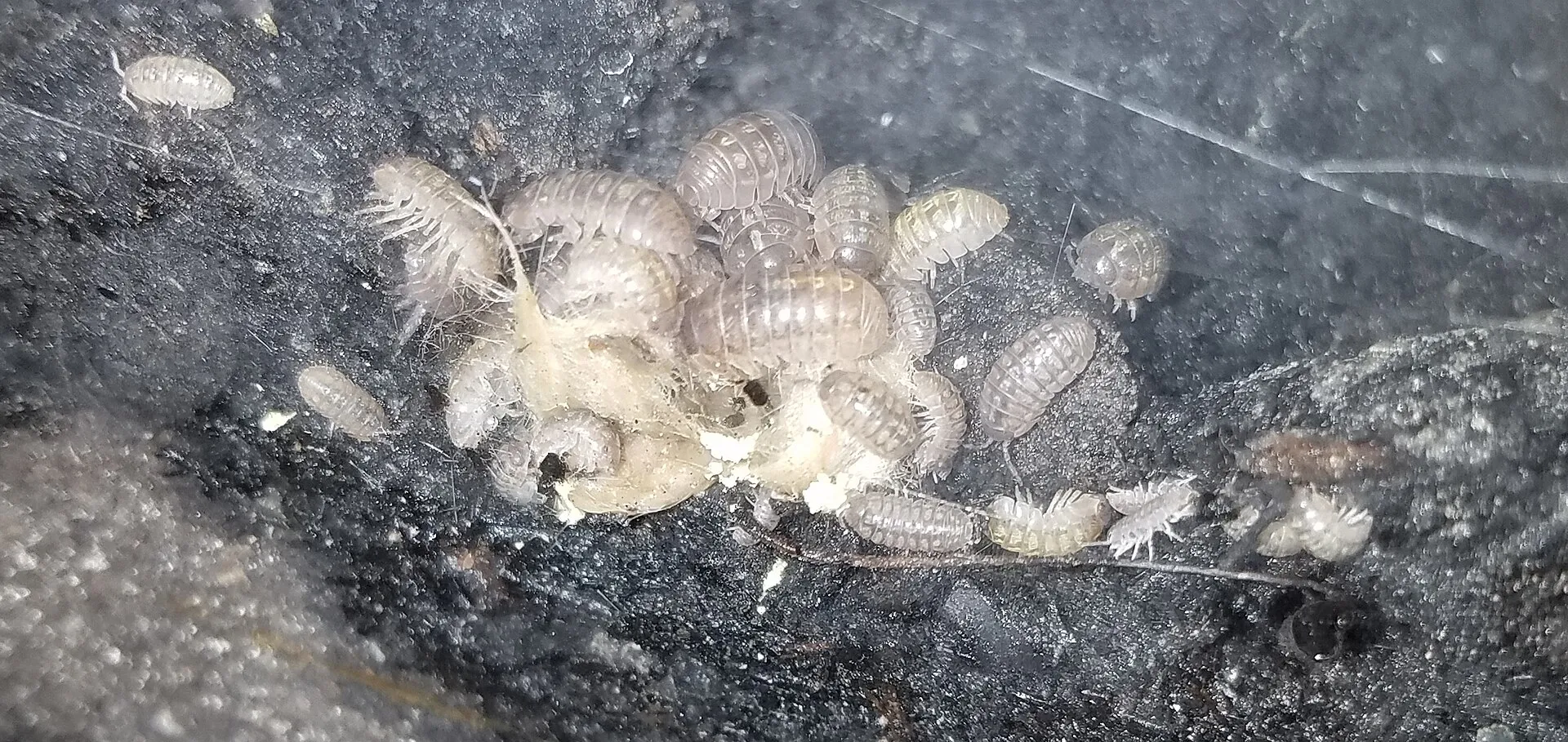 Photo: HCA, CC BY-SA 4.0
In this guide
Short answer: a simple tropical bioactive mix is about 40% organic topsoil, 20% coco fiber, 20% orchid bark, 10% sphagnum moss and 10% leaf litter and charcoal, all by volume. For arid setups, replace much of the coco fiber and moss with play sand or excavator clay. The mix should be loose, drain well and hold moisture without turning into mud.
What each ingredient does
| Ingredient | Role |
|---|---|
| Organic topsoil | Structure, nutrients for plants, holds burrows |
| Coco fiber (coir) | Holds moisture, keeps the mix light |
| Orchid bark | Keeps the mix loose, improves airflow and drainage |
| Sphagnum moss | Holds a lot of water |
| Leaf litter (crushed) | Food for the cleanup crew inside the soil |
| Charcoal or biochar | Adds structure and porous surfaces; many keepers include it |
| Sand or clay | Firmness and burrowing structure in arid mixes |
Tropical mix (crested geckos, tree frogs, tropical lizards)
| Ingredient | Parts by volume |
|---|---|
| Organic topsoil | 4 |
| Coco fiber | 2 |
| Orchid bark (fine) | 2 |
| Sphagnum moss (chopped) | 1 |
| Crushed leaf litter + charcoal | 1 |
Arid mix (leopard geckos, bearded dragons)
| Ingredient | Parts by volume |
|---|---|
| Organic topsoil | 4 |
| Play sand (washed) | 3 |
| Excavator clay or similar | 2 |
| Crushed leaf litter | 1 |
The clay lets the soil hold its shape when dry, so animals can dig burrows. Arid setups usually skip the drainage layer.
How to mix it
- Hydrate the coco fiber in warm water and let it expand. Squeeze out excess water.
- Chop the sphagnum moss into short pieces.
- Combine everything in a large tub or on a tarp and mix by hand.
- Check the moisture: squeeze a handful. It should hold together and then crumble, with no water dripping.
- Add it to the enclosure, 3–4 in deep for most tropical setups. Our Substrate Calculator shows how much to mix.
Ready-made or DIY?
| DIY | Ready-made | |
|---|---|---|
| Cost | Lower for big enclosures | Higher |
| Control | You can adjust the mix | Tested blends |
| Convenience | Takes time to source and mix | Open and pour |
| Best for | Large or multiple enclosures | Small enclosures, beginners |
Keeping the substrate healthy
- Top up leaf litter as the isopods eat it
- Add a thin layer of fresh substrate every so often as it breaks down and settles
- Don’t let it get waterlogged. If the bottom layer smells sour, it’s too wet. See do you need a drainage layer
Frequently asked questions
Can I use potting soil for a bioactive terrarium?
Only if it’s organic and free of fertilizer, wetting agents and perlite. Many potting soils contain those, so read the label.
How deep should bioactive substrate be?
About 3–4 in (7–10 cm) for most tropical setups, deeper for burrowing animals and large plants.
Do I need charcoal in my substrate mix?
It’s optional. Many keepers add it for structure and extra surface area.
How often do I replace bioactive substrate?
In a healthy setup, rarely. Topping it up is usually enough for years.